Abstract
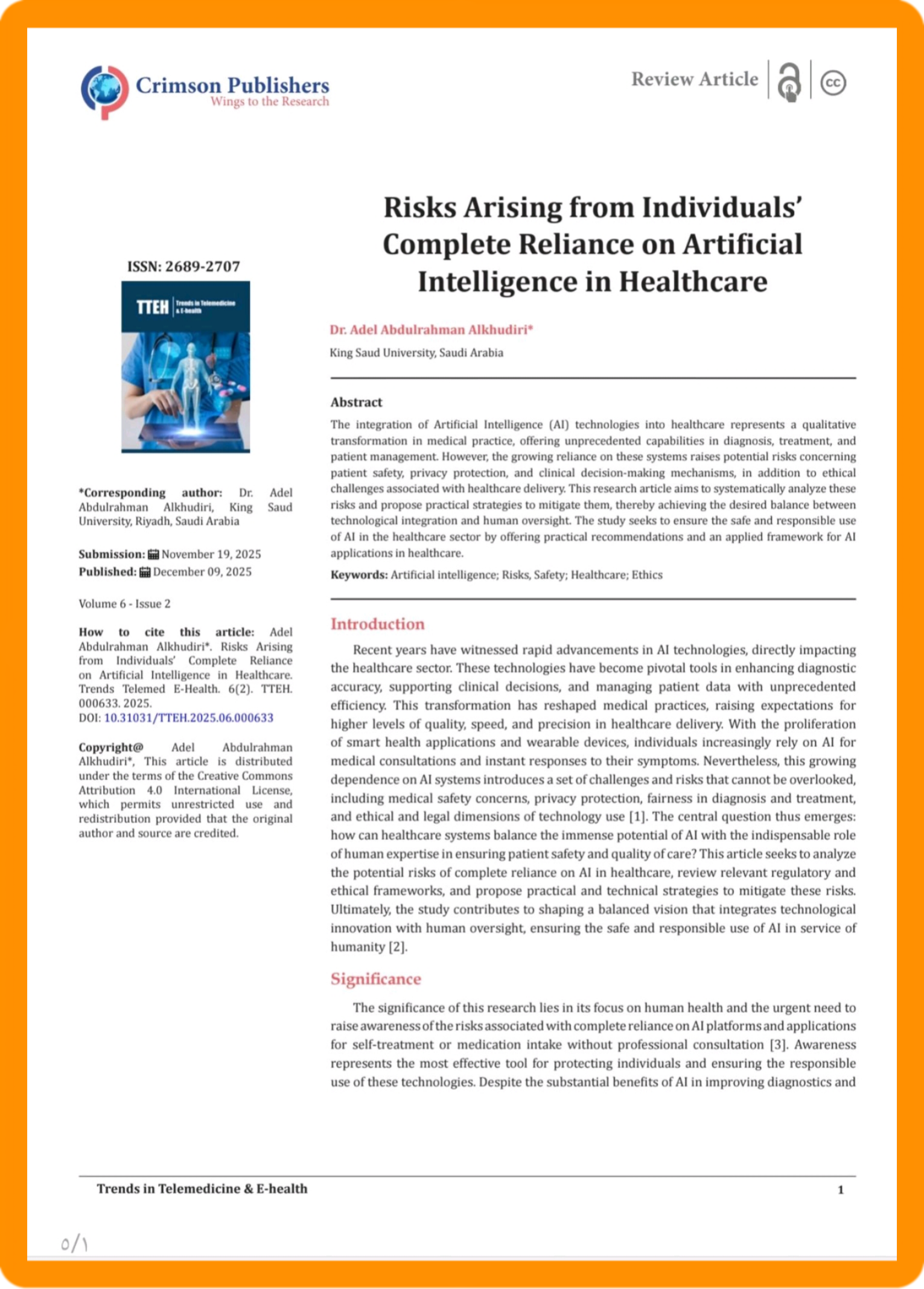
The integration of Artificial Intelligence (AI) technologies into healthcare represents a qualitative transformation in medical practice, offering unprecedented capabilities in diagnosis, treatment, and patient management. However, the growing reliance on these systems raises potential risks concerning patient safety, privacy protection, and clinical decision-making mechanisms, in addition to ethical challenges associated with healthcare delivery. This research article aims to systematically analyze these risks and propose practical strategies to mitigate them, thereby achieving the desired balance between technological integration and human oversight. The study seeks to ensure the safe and responsible use of Al in the healthcare sector by offering practical recommendations and an applied framework for Al applications in healthcare.
ملخص: يمثّل دمج تقنيات الذكاء الاصطناعي في القطاع الصحي تحولًا نوعيًا في الممارسة الطبية، إذ يوفّر قدرات غير مسبوقة في مجالات التشخيص والعلاج وإدارة رعاية المرضى، غير أنّ الاعتماد المتزايد على هذه الأنظمة يثير جملة من المخاطر المحتملة المرتبطة بسلامة المرضى، وحماية الخصوصية، وآليات اتخاذ القرار السريري، فضلًا عن التحديات الأخلاقية المصاحبة لتقديم الخدمات الصحية. ويهدف المقال البحثي إلى تحليل هذه المخاطر بصورة منهجية واقتراح استراتيجيات عملية للحد منها، بما يحقق التوازن المطلوب بين التكامل التقني والإشراف البشري. ويدعو إلى ضمان الاستخدام الآمن والمسؤول لتطبيقات الذكاء الاصطناعي في القطاع الصحي من خلال تقديم توصيات عملية وإطار تطبيقي موجّه لاستخدامات الذكاء الاصطناعي في الرعاية الصحية.
أدعوكم لقراءة هذا المقال البحثي بعنوان مخاطر اعتماد الأفراد الكامل على الذكاء الاصطناعي في الرعاية الصحية، وذلك بالضغط》》هنا
للتحميل 》》
اترك تعليقاً